V
Maskelyne made the rounds of his
neighborhood that afternoon, calling at every residence in a three block radius
of his house. He knocked on each door and explained, top hat deferentially
doffed, that as a gesture of autumnal goodwill he was offering free tickets to
his Mechanical Theatre to all his neighbors. Normally this would of course exclude
the servants, but they were welcome as well, with their tickets thoughtfully reserved
for a night separate from their employers to avoid embarrassment. He simply
required the names and ages of each of the home’s residents—information gratefully
given, and noted in his little silver notebook.
Despite his thoroughness, the
results were unpromising. His neighbor’s gardener’s son, it turned out, was now
away at boarding school, thanks to an ambitious father. And as suspected, the
family with the two daughters down the street only hosted “dear cousin Jack”
during the summer holidays—and besides were preoccupied with the recent death
of one of the parents, though he was too polite to ask which one. The rest of
his neighbors had no sons or had boys either too young or old to be likely
suspects.
It had been an expensive investigation,
he mused, looking over his notes. He’d be giving away a lot of tickets in the
next month.
When he returned to his home the
large wooden crate with the Egyptian Fortune Teller had arrived and stood on the
sidewalk, attended by two of his mechanics. He opened the gate and they
followed him through to the front door, struggling with their load and eyeing
the lawn ornaments whose heads ominously followed them. Maskelyne engaged the
porch lift, and as they lowered the crate and its contents to the basement he
walked the grounds with tool kit in hand, looking for signs of malfunction in
his decorative sentinels. Aside from a delicate faun whose hidden fangs needed
oiling, all seemed in working order.
He returned to find the two
mechanics still on the porch, petrified, as he hadn’t told them that the
ornaments had been switched to “observe.” He would have scolded them for their
timidity, but there had been a few incidents involving his employees and his
automatons in the past decade that had resulted in injury—but not, he was
careful to remind them, death. They nodded in agreement and hurried down the
path to the gate as if they feared it might shut them in permanently.
He entered the house, set the
sentinels, and realized that it was past six and his entire evening’s routine was
off. The ice had melted in his gin and tonic, and there was no time to more than
glance at the newspaper’s headlines before dinner. As if affected by their
Master’s mood the kitchen staff produced a meal both undercooked and
over-spiced, with the low point being a warmed romaine salad draped listlessly
over white fish.
Leaving his meal half-eaten, Maskelyne
ascended to his aerie workshop more or less on schedule. He turned up the gas lamp
over his workbench, revealing several projects in various stages of repair or
creation. There were two differential equation centers and an experimental oil
regulator, and at the back of the bench was an invention that had sat there for
months, the Aetheric Navigator. He had felt certain that the device could
increase his nightly yield of ectoplasm by crudely mapping the invisible world
for richer currents of the stuff. Yet so far it was sporadic and unreliable and
when switched on the colored lights on the console sparked feebly and in no
clear pattern.
He walked to the window and surveyed
the warm September night. The porch lamp cast a warm glow over the path below but
most of the grounds were in darkness. He reached out and pulled the curtains
slowly shut, knowing that the light from the room would continue to illuminate
them.
Then instead of returning to his
seat, he crept silently down the stairs, into the kitchen, and descended into
the basement. Moving in the darkness, he took a seat in a wooden chair against
one wall, facing the bank of windows through which his visitor had entered the
night before.
He felt certain that having visited
him once without being caught, the boy would come again. After all, he had been
a boy once.
As a child he had been tremendously
destructive. When scarcely more than a toddler in the orphanage he had
dismantled and destroyed clocks, watches, kitchen appliances, gardener’s tools,
the laundry’s mangler, the headmaster’s trouser press, the kitchen’s dumbwaiter
and the orphanage’s furnace before the staff wisely shipped him off to an apprenticeship with an aged watchmaker in
Brussels. Compared to his master’s dour demeanor the gray rain-soaked buildings
of that city were practically florid.
The man was stern and cruel and a
firm believer in corporal punishment, but at least he recognized in his student
a great talent. “Any moron can destroy. Rise above your bastard beginnings boy,
and learn to create,” he would tell him between beatings. When Maskelyne began
to learn his craft, he was sometimes so absorbed that he would work far past
dinner. The clockmaker, who at least didn’t starve the child, would leave him a
tray of congealing stew. “Solitude is
the inevitable companion of genius,” he would quote, turning the key in the lab’s
lock, shutting the boy in for the night.
This night reminded him of those,
the intensity, the sense of purpose. For tonight he was sure he would meet his
nemesis.
As he continued his vigil he
thought on his history of creation, of the long road from obscure apprentice to
world-renowned master, from a child driven only by anger and loneliness to a
man of power and triumph. Now at the height of his art, some awful boy was
smearing his pudgy fingers into the inner workings of his mechanical children.
It would not be tolerated.
Suddenly he heard a bell ringing.
It was the same bell he’d heard the night before, yet the windows before him remained
closed.
Swiftly he was out of his chair and
up the stairs. He threw open the doors of the Perimeter Monitor, and saw that the
copper wire glowed red at the window of his library.
He rushed into the room and saw the
open window, but nothing else was amiss. He pulled out the derringer kept in
his right waistcoat lining and began going from room to room, his nerves
quietly humming.
Up in his aerie workshop he saw it.
The Aetheric Navigator had been pulled forward right to the front of his workbench
and his Lensing Station had been set over it. The lights on the console now
glowed steadily.
He had been here, and left this,
his handiwork. It was an insult. And he knew now there could be no mercy. He
would have his revenge.
“I shall catch him,” he said,
leaving the workshop. He would of course check the rest of the house, but he
felt sure that having completed his taunting vandalism, the boy had left. “I
shall catch him,” he repeated, in a low tone. “For I shall create a trap he cannot
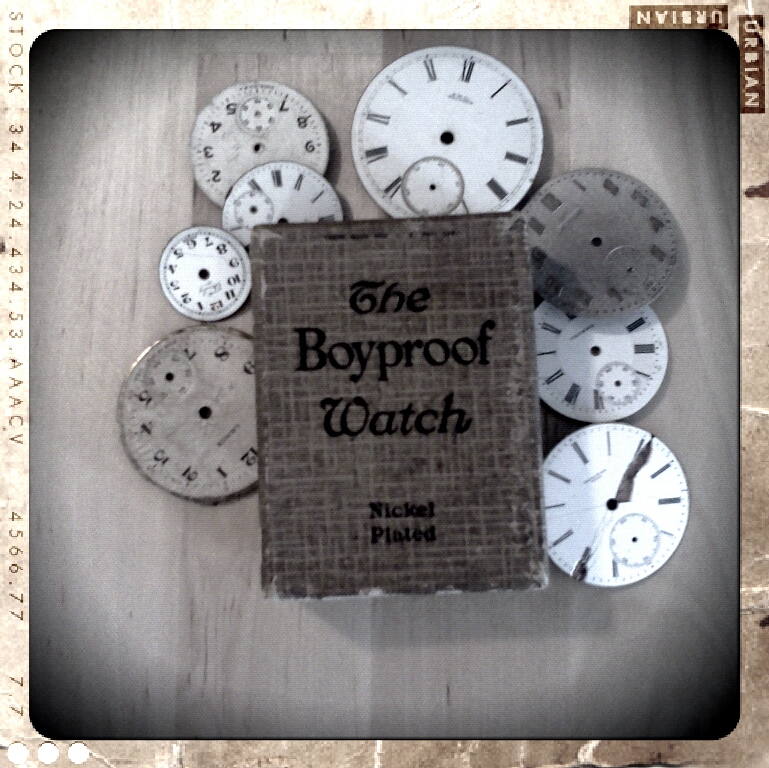
resist. I shall create a Boyproof Watch.”